10 Ideas for the Spooky Instagram Posts
A pumpkin in the corner does a surprising amount of work in October. Suddenly the same discount banner from September is a Halloween campaign. Fair enough, sometimes the shop just needs to tell people that the candles are on sale. But there is quite a bit more room here than another orange rectangle saying something is spooky.
The useful Halloween posts usually borrow something people already do around the holiday. Choosing a costume. Buying the wrong amount of sweets. Pretending an ordinary workplace problem is a horror film, which does not require much pretending in some workplaces. The seasonal bit gives the post a shape; your actual subject still needs to be inside it.
1. The horror story that is actually about your work
“The client sent the logo in a Word document.” A designer has a whole carousel already. A baker can do “things people ask for the evening before collection.” The joke works because the detail is recognisable, not because the font is dripping blood.
Keep customers anonymous and leave private messages out of it. A composite example clearly described as an example is enough. There is no need to turn somebody's actual bad Tuesday into your engagement material.
2. Which Halloween person are you?
The person who has planned the costume since August, the person who buys one on the way to the party, the person who came for the food. People know somebody in each slide. That little recognition is a decent reason to send a post to a friend.
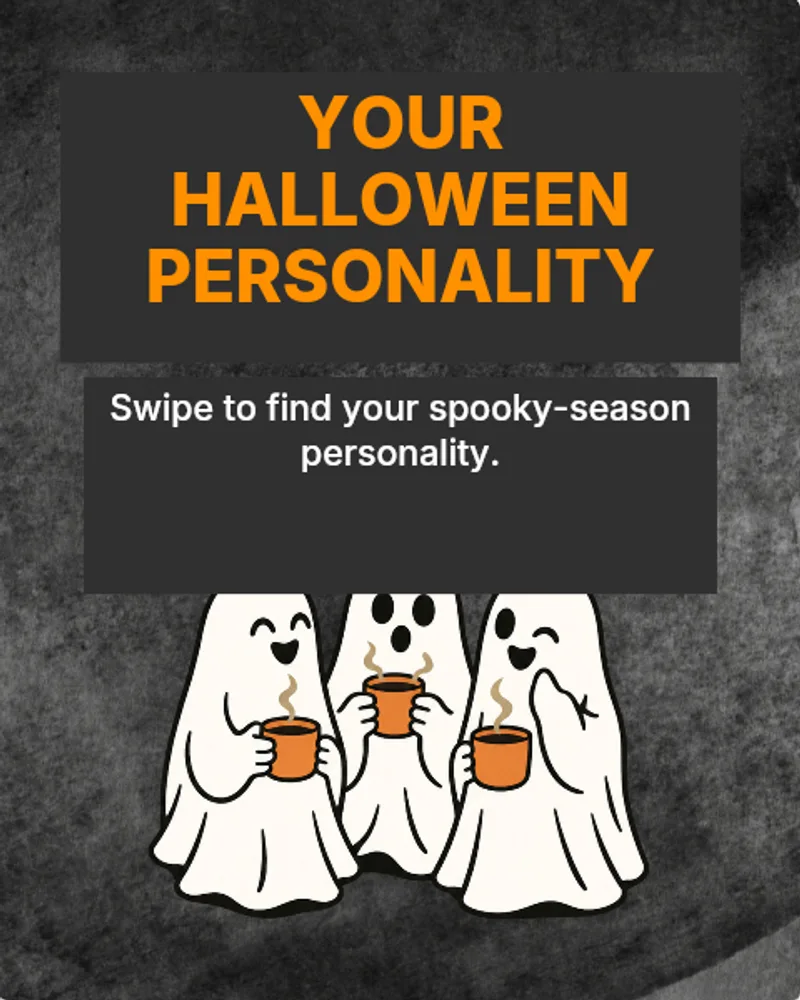
Our What is your Halloween personality? template already has the charcoal-and-orange look for this. These are real example slides, before your own people and wording go in.
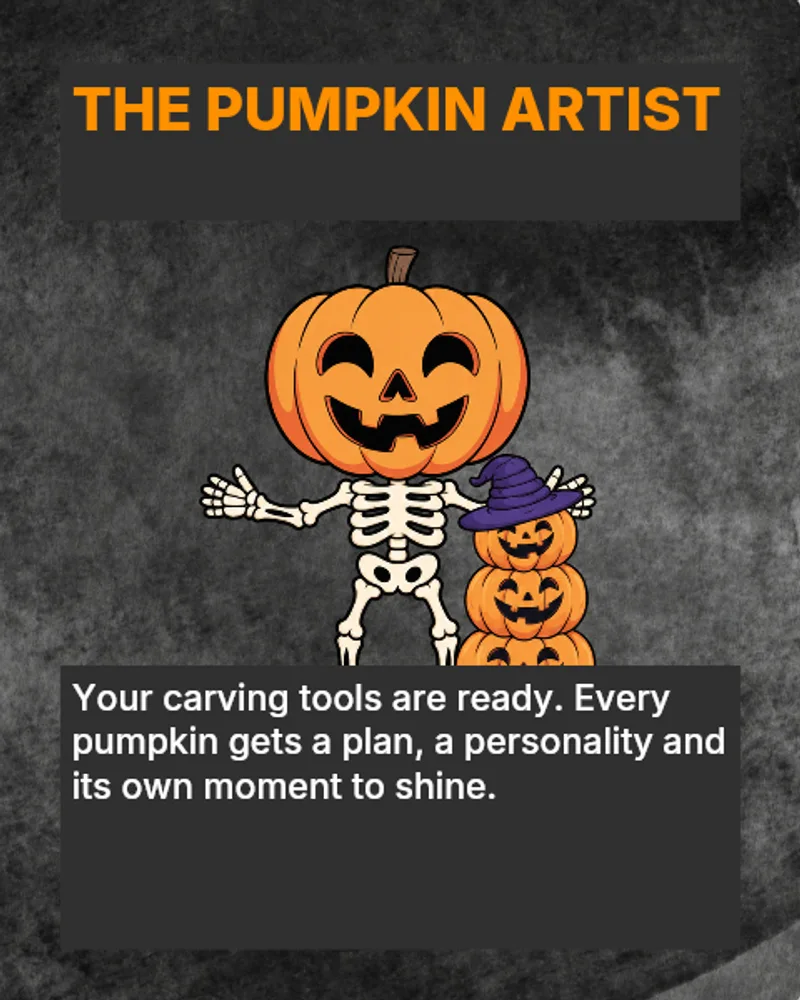
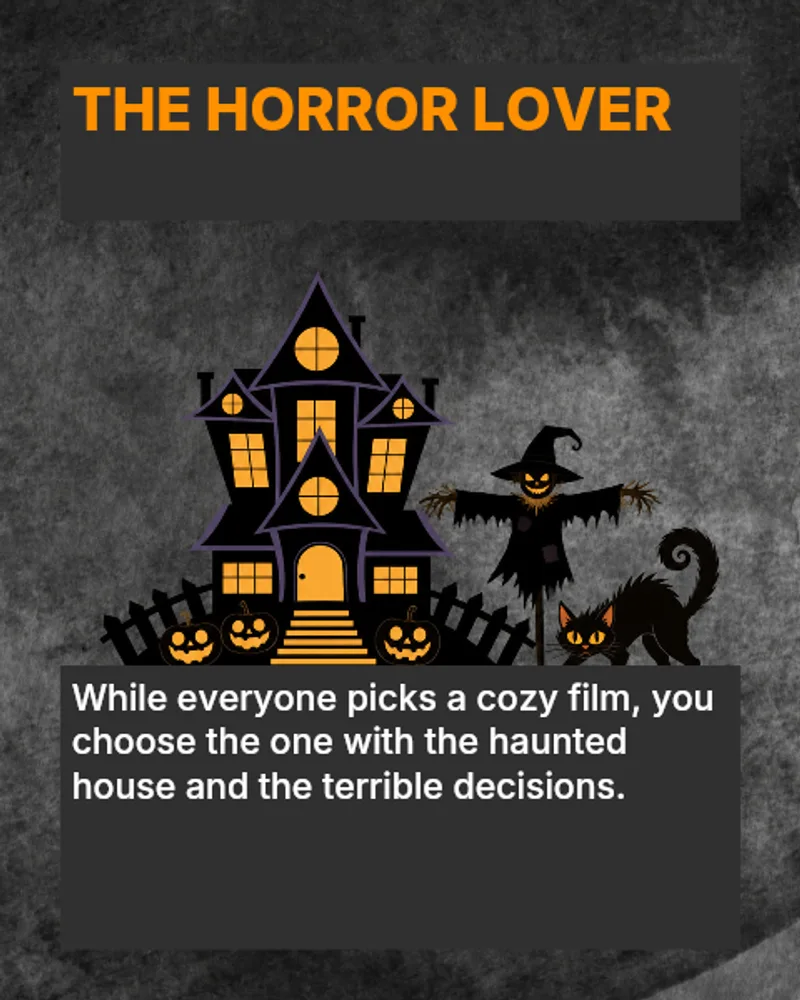
The Halloween template search includes this design. Make the types specific to your audience. “The spreadsheet witch” probably belongs on an operations account more than another generic vampire.
3. A costume made from things already in the cupboard
Give the finished outfit first, then show what went into it. Three ordinary pieces, where the annoying detail came from, what could be replaced. A clothes shop has a natural reason to publish this; an unrelated software product probably does not need to force itself into the conversation.
Google's 2026 Frightgeist update includes horror characters and screen favourites among this year's costume searches. That is a source of ideas, not permission to invent that your exact outfit is “the most viral costume of 2026.”
4. The before-the-party checklist
A post someone opens again at 5pm has a different job from a post someone likes at lunch. Think spare phone charger, the address people can actually find, food labels, a way home. For a venue, include the real entry rules and the time the kitchen closes. Those details matter rather more than a seventh ghost sticker.
5. Four treats, with the inconvenient details left in
Recipes become annoying when the photo looks easy and the ingredients require a specialist shop on the other side of town. Put the time, ordinary substitutions and any relevant ingredient notes beside the idea. Don't call something allergy-safe unless you can back it up.
The 4 Easy Halloween Treats layout has paper textures and photo frames, so it can feel like a small recipe notebook rather than an advert for a supplement.
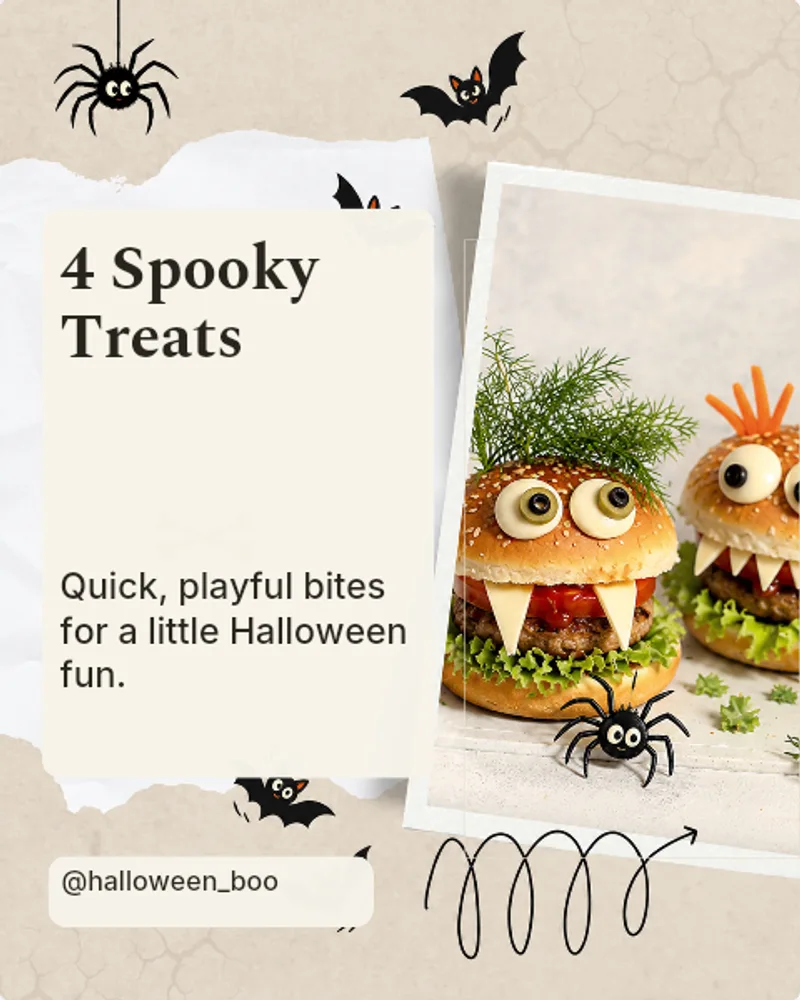
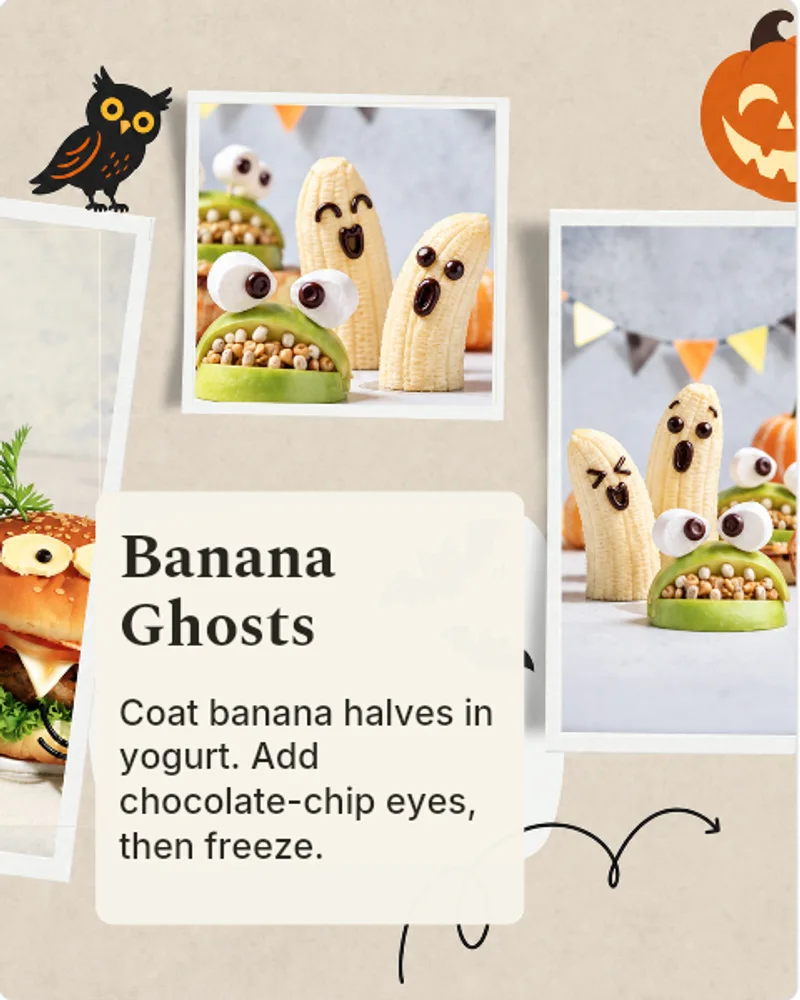
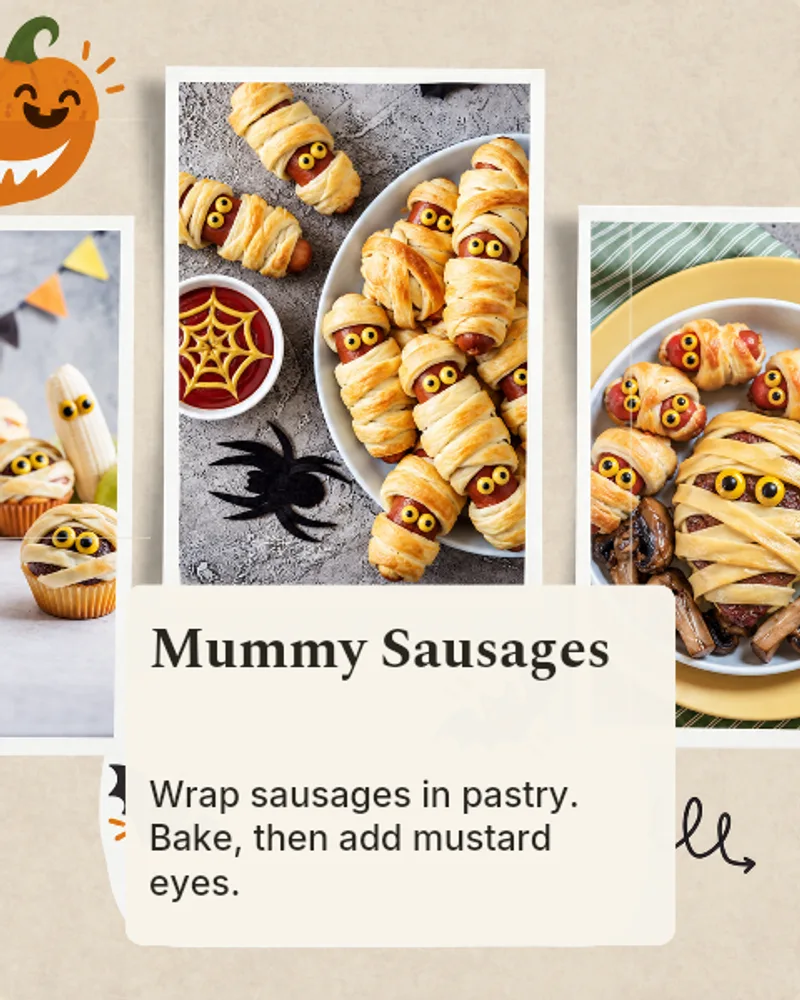
A café could use the same structure for four things actually on the counter this week. Real photos would help more than a paragraph about how magical the season feels.
6. A bad habit with a monster's name
The meeting that comes back from the dead. The abandoned basket. The inbox that eats Friday afternoon. There is a mildly stupid version of this in almost every niche, and mildly stupid can be fine if the observation underneath is good.
One problem per slide. The useful bit can be one sentence underneath it. No need to diagnose the entire industry.
7. The Halloween photo dump with an actual thread
A photo dump does not need a productivity lesson, thankfully. But there should be some reason these pictures live together. The afternoon you decorated the shop. The increasingly failed attempts at carving a pumpkin. The team trying to agree on a costume theme and agreeing on absolutely nothing.
Halloween Days is a photo-journal template for that sort of post. Three pictures you actually took are a better starting point than ten perfect images of a party that never happened.
8. Pick the ending
Show an unfinished scene and give readers two possible endings. A bakery could show a half-decorated cake and ask whether it becomes a ghost or a monster. Then post what you made. The second post is the part brands somehow forget; asking people for an opinion and disappearing makes the whole exercise feel like a form somebody had to fill.
9. A small seasonal offer, properly explained
If the post is selling, let it sell. Say what the thing is, the actual price, who it suits and when the offer ends. “The scary good deal you cannot miss” leaves almost every useful question unanswered.
A cover with one product and one readable price can be enough. The following slides can handle size, collection or delivery, and the link. Put the deadline in a time zone your customer understands.
10. What happened after the pumpkins came down
The slightly tired November 1 post has possibilities. What sold out, what barely moved, the costume nobody understood, the decoration still attached to the ceiling. A small honest account of the week can be more enjoyable than another announcement that the campaign was a huge success.
Actual results are welcome. “We sold 18 boxes” tells a reader something. “The community came together in an unforgettable celebration of connection” is quite a long way of avoiding the number.
The Halloween collection gives these ideas somewhere to live. Pick the layout that fits the post you have, then remove whatever makes it harder to read. Even the pumpkins, if necessary.
It feels good to have your first carousel going viral 😏
Just your idea, click-clack and voila! ViralityWand made just for that